Mobile Amharic reference for comparative religion and interfaith study
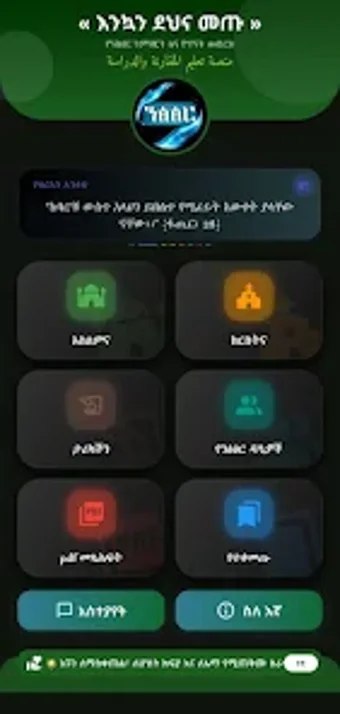
ንፅፅር - Comparative Faith, by ኸድር ሚዲያ እና ቴክ, is an Android reference app for Amharic speakers studying comparative religion. It presents structured arguments and scripture-based analysis comparing Islam and Christianity, using textual excerpts and interpretive notes to clarify doctrinal similarities and differences. The app groups material by theme, offers keyword search and offline reading, and receives regular updates. Intended for Amharic-speaking Muslims, theology students, and participants in interfaith dialogue seeking localized mobile study resources.
What educational gap does the app fill for Amharic learners?
The app compiles comparative religious material into Amharic, addressing a scarcity of portable, language-specific references for local discussion. It concentrates on the relationship between Islam and Christianity, supplying argumentative texts and scriptural citations that match the Ethiopian cultural frame. For learners who prefer source-based comparison in their native language, the app provides a single access point for curated scholarly and interpretive material.
How does the app support comparative study methods?
Comparative analysis is supported through side-by-side scriptural references and structured argumentation that encourage text-driven comparison. Those studying doctrinal differences can follow cited passages and reasoned commentary to form evidence-based conclusions. The presentation emphasizes source material and reasoned exposition rather than interactive drills, so learners focus on reading, annotation, and reflection as study methods.
Is it appropriate for learners and educators in Ethiopian settings?
The app is built for Amharic speakers, which suits local classrooms, study groups, and individual learners seeking regionally relevant material. The developer focuses on Islamic educational resources for the Ethiopian community, and the platform runs on Android devices requiring Android 5.0 or later. That combination makes the app practical for mobile study in Ethiopia and the diaspora, while depending on device availability for classroom deployment.
How is content organised for focused study sessions?
Content uses thematic grouping and searchable text to help learners target specific topics during study sessions. Study workflows supported by the app include:
quick keyword lookup for debate preparation,
themed reading blocks for comparative essays,
manual cross-reference review of scripture passages.
Offline reading lets learners maintain study continuity when internet access is intermittent, supporting repeated review and note-taking during fieldwork or travel.
Useful, focused reference for Amharic theology students and discussion groups
Comparative Faith is a practical option for Amharic-speaking learners and educators who want a mobile, context-aware reference for interfaith study; one limitation is its Android-only distribution and device requirement. A practical tip: set short daily reading targets and use keyword searches to assemble topic lists for seminar or debate preparation. Comparative Faith suits readers seeking accessible, locally framed material for textual comparison.
Pros
Amharic-language content tailored to Ethiopian religious discourse
Scriptural cross-references between Quran and Bible for direct comparison
Offline reading enables study without continuous internet access
Thematic categories and search support targeted topic exploration
Cons
Android-only, requires Android 5.0 or later
Primary focus on Islam and Christianity limits other faith coverage
Content assumes some theological background, challenging newcomers
Loading…
About permissions
Before downloading, you can take a quick look at the permissions this app may request on your device. App permissions allow certain features to work properly, such as accessing your camera to take photos, your location for maps, or your storage to save files.
In this section, you’ll find a clear and simple overview of the types of permissions the app uses, grouped by their level of sensitivity, along with a visual breakdown to help you understand them at a glance. This way, you can see how the app interacts with your device and decide to download with confidence.
Permissions types
Standard
56%
Non-standard
11%
Sensitive
33%
Permissions distribution
Privacy
44%
Data collected
33%
Data shared
22%
Data safety info
Privacy
4 permissions
Permissions that allow the app to access personal or sensitive information stored on your device, such as location, contacts, camera, or microphone.
android.permission.RECEIVE_BOOT_COMPLETED
Standard
android.permission.VIBRATE
Standard
android.permission.WAKE_LOCK
Standard
android.permission.SCHEDULE_EXACT_ALARM
Non-standard
Data collected
3 permissions
Information the app may gather from your device or usage activity to enable features, personalize content, and improve overall performance.
android.permission.ACCESS_NETWORK_STATE
Standard
android.permission.READ_EXTERNAL_STORAGE
Sensitive
android.permission.READ_MEDIA_IMAGES
Sensitive
Data shared
2 permissions
Information that may be shared with trusted third parties to provide services, support app functionality, or deliver relevant content.
android.permission.INTERNET
Standard
android.permission.POST_NOTIFICATIONS
Sensitive
This report summarises the permissions declared by the app at the time of scanning and groups them into Privacy, Data collected and Data shared. A declared permission shows what the app can access, it does not necessarily mean personal data is collected or transmitted. For full details check the app’s privacy policy and the developer’s clarifications shown below. Softonic generates this report automatically from the package metadata; it is informational and not a substitute for a full security or privacy audit.
Laws concerning the use of this software vary from country to country. We do not encourage or condone the use of this program if it is in violation of these laws. Softonic may receive a referral fee if you click or buy any of the products featured here.